
Debris Removal
Eavestrough Cleaning Victoria
Clogged eavestroughs demand different clearing methods depending on what's actually up there. We remove every type of debris and restore water flow.
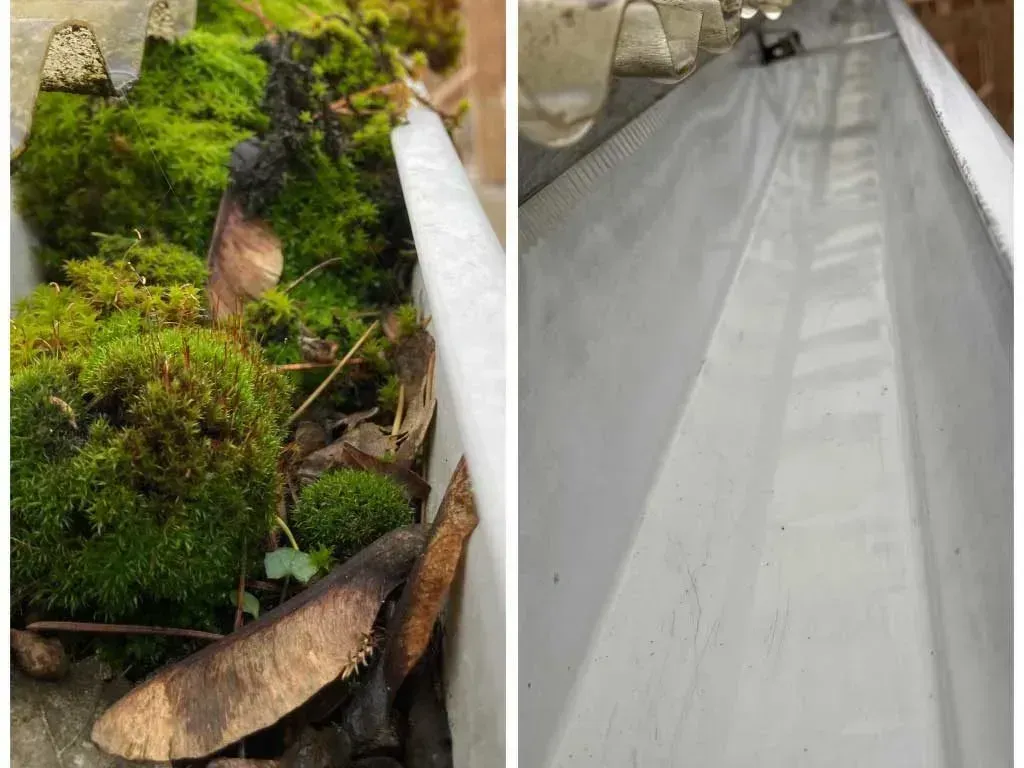
Your eavestroughs don’t all clog the same way, and they don’t all clear the same way either. The debris sitting up there right now determines whether we can flush it out or whether we need to get our hands in there and pull it free. Understanding what’s actually blocking your gutter—and what actually removes it—is the difference between a quick clear and a wasted visit.
Douglas Fir and Western Red Cedar Needles
These needles aren’t the problem. The matted felt they become is. Fir and cedar needles from the mature trees in Uplands, Rockland, and Fernwood don’t rinse the way you’d think. When they get wet and settle over weeks, they compress into a dense, damp mat that holds water like a sponge. Flushing just spreads it around and leaves the blockage in place. We clear needle matting by hand—reaching in with a scoop, pulling it free in sections, and removing it entirely. That’s the only way water flows again. If we just flush, we’re moving wet felt around and calling it done. Your gutter clogs again within weeks. The felt also traps moisture against the gutter metal, which speeds rust and damage to older gutters.
Bigleaf Maple Leaves and Heavy Seed Keys
Bigleaf maple is generous with both. Spring brings thousands of large leaves and heavy, winged seed keys—the kind that don’t float. They pack tight in the gutter and jam at the downspout elbow where the angles change. A good flush might move some, but the keys wedge where the downspout meets the run, and hand-clearing is faster and cleaner. We pull the debris free, inspect the elbow, and confirm water flows all the way down. Flushing alone leaves half of them behind.
Rooted Moss
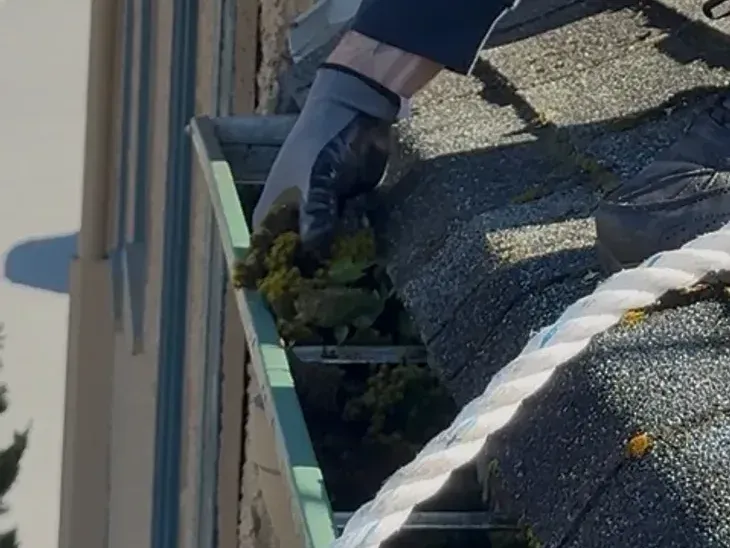
Moss isn’t blown in on the wind. It takes root, especially on north-facing roof slopes where moisture lingers longer and sunlight is scarce. Once it’s established, water alone won’t shift it. You’re trying to rinse away a plant that’s holding on with tiny rootlets dug into the gutter. We clear moss by hand, removing the root structure, not just the visible green growth. That prevents it from regrowing in the same spot within days. A flush handles surface debris. Rooted moss demands removal and inspection to make sure it’s gone.

Garry Oak Leaves and Acorns
Garry oak drops leaves late and acorns in winter. The acorns are the real problem: they’re dense, heavy, and the wrong shape to pass a downspout elbow. One acorn wedges in the bend and the whole system backs up. Leaves pile behind it. A flush won’t move an acorn stuck in an elbow—you have to access the downspout itself and clear it from below. We don’t just clear the run above. We clear the blockage where water actually stops, so it flows all the way to the ground.
Shingle Grit and Sediment
Ageing asphalt shingles shed grit over time, especially in Victoria’s wet season. That grit settles in the gutter as a fine, dense sludge—heavier than leaf debris and sticky when wet. Flushing can move some, but it leaves a layer that harbours moss and traps moisture against the metal. We clear it by hand and then flush, so the gutter is truly clean, not just cleared. That matters on older roofs where sediment accumulates faster than leaves pile up.
Why One Method Doesn’t Clear Everything
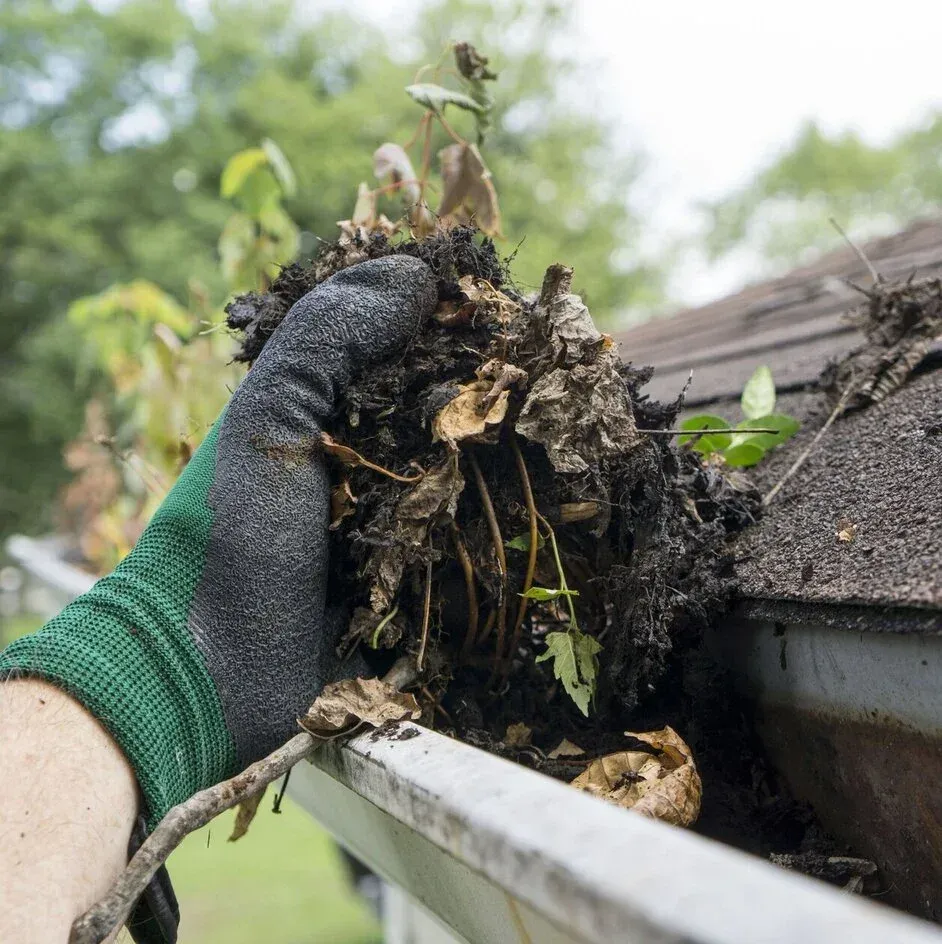
The temptation is to think flushing solves it all. A garden hose clears loose debris and some sediment. It doesn’t remove matted needles, rooted moss, or wedged acorns. Hand-clearing with a scoop gets everything out and lets us inspect the gutter, spot damage, and confirm downspouts are flowing. We combine both methods when the job needs it—hand-clear the debris that needs removal, then flush to confirm water flows and to rinse anything flushing can handle. That’s the right way to do it.
The debris you’ve got determines the approach. We assess what’s actually up there and clear it the way it needs to be cleared, so your gutter flows freely and stays that way. When we’re done, you’ll know your gutters can handle whatever the wet season throws at them—and your roof and foundation stay protected.
How it works
What Happens When You Book Us
Four steps and no surprises. You tell us about the house, we price the real roofline, and the ladder work is ours.
Send us the details
Your address, how many storeys, and anything we should know before we turn up.
The awkward parts are the useful ones — an oak hanging over the back run, a side gate too narrow for a ladder, a neighbour's drive we'd need to cross.
We price your actual house
Every quote is built from your roofline, not from an average.
Run length, height, pitch, how much has packed in and how we'll reach it all move the number. You'll have it in hand before anything is booked.
We do the climbing
Gutters cleared, downspouts flushed, water followed to where it lets out.
Whatever comes out of the run leaves with us. Nothing gets tipped into a garden bed or left bagged by the gate.
You hear what we saw
From the roof edge we see things that are invisible from the lawn.
A hanger starting to pull, a seam beginning to weep, water standing in a section that should drain. You'll hear about it either way, with nothing attached.
Four steps. That's the whole thing.
- You send us the address.
- We send you the price.
- We clear the gutters.
- You stop thinking about them.
Ready when you are — send the form or give us a call for a free quote.
Customer reviews
What customers say
“Amazing! Sent in a request form on their website in the morning, heard back that afternoon, and booked for the next day. Very fast, reliable, and efficient.”
“They are efficient, hardworking, and reliable. I’ll definitely call them again for other services. Highly recommended!”
Got questions?
Eavestrough Cleaning — questions
What's the difference between clearing and flushing eavestroughs?
Clearing means removing debris by hand with a scoop or trowel. Flushing means running water through to rinse loose material. Most gutters need both. We hand-clear debris that won't rinse—matted needles, rooted moss, wedged acorns—then flush to confirm water flows and remove anything flushing can handle.
Can you clear eavestroughs packed with fir and cedar needles?
Yes. Douglas fir and western red cedar needles mat together in wet gutters and won't rinse away. We remove them by hand to clear the matting, then flush to confirm water flows freely. Flushing alone leaves the felt behind and won't clear the gutter.
How do you prevent moss from regrowing in my eavestroughs?
Rooted moss needs removal, not just rinsing. We clear the root structure so it doesn't regrow in days. Regular clearing twice a year—spring and fall—stops moss before it establishes. North-facing roof slopes with heavy shade are most vulnerable, so we assess your roof and recommend a schedule.
Why do oak acorns clog my downspout so easily?
Garry oak acorns are dense and the wrong shape to pass a downspout elbow. One wedges in the bend and stops water flow, trapping leaves and debris behind it. We clear the elbow itself, not just the run above it, so water reaches the ground.
Do you clear both the gutter and the downspout?
Yes. We hand-clear the horizontal run, then flush water through the downspout. If it's blocked, we clear it from below or from above, depending on where the clog is. Your gutters are only flowing if water reaches the ground, not just the downspout opening.
How often should I have my eavestroughs cleared?
Twice a year is standard for most Victoria homes: late spring after maple and needle shedding, and fall before the wet season. Properties under heavy Douglas fir or cedar canopy may need three clearings yearly. We can recommend a schedule based on your roof and trees.
What's the grey sludge that settles in my gutters?
That's sediment from ageing shingles, decomposed leaves, and roof dirt. It's heavier than loose debris and doesn't rinse with a garden hose. We remove it by hand and flush to confirm the gutter is truly clean. Sediment harbours moss and traps moisture, so clearing it prevents problems.
Will you take the debris away when you're done?
We remove all debris—needles, leaves, moss, grit, everything—and take it away. You won't have a pile of wet eavestrough waste on your driveway. Your property is tidy and your gutters are clear when we leave.
How long does eavestrough cleaning take for a typical home?
A single-storey home usually takes 1 to 2 hours, depending on debris volume and whether downspouts need clearing. We assess the job before starting and let you know what to expect. Multi-storey homes and heavy debris loads take longer. We give free quotes so you know upfront.
Do you guarantee your eavestrough cleaning work?
Yes. We guarantee your gutters will flow freely when we leave. If you spot a problem within 7 days, we'll come back and clear it at no charge. We stand behind the work and want you confident the job is done right.
Eavestrough Cleaning in Victoria and the surrounding area
Tell us the address and we will get you a price.