
REPAIR & RESTORE
Gutter Repair Victoria
When your gutters start to fail, we diagnose what went wrong and fix it right—from sagging runs and weeping seams to damaged hangers and downspouts, we keep your home protected.
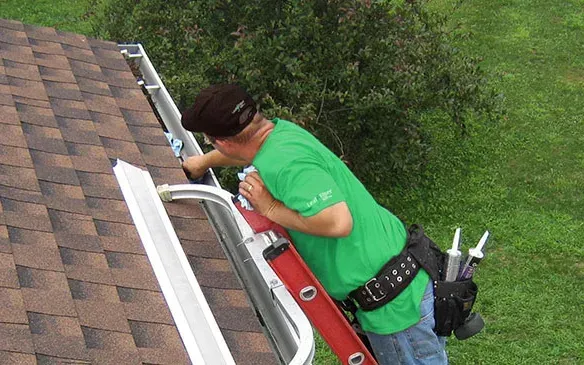
Gutter repair is different from gutter cleaning. Cleaning keeps the water moving; repair fixes what’s broken so the water can move at all. When a gutter fails, it fails for a specific reason—and whether it’s worth fixing depends on which reason and whether the rest of the run has done its time.
Sagging Runs
A gutter that sags in the middle is usually carrying water that should have flowed away. That weight pulls the metal down, and the situation gets worse the more water sits. On the wet coast here, sitting water isn’t unusual—it means either the slope has flattened, the hanger spacing is too wide, or the hanger has rusted or pulled free.
The fix depends on what caused the sag. If the slope has gone flat, we reset the run so water flows downhill toward the downspout. If the hangers are spaced too far apart—older installs sometimes used 4-foot spacing—we add intermediate supports. If the hanger itself is bent or rusted, we replace it. A sagging run that holds water also holds debris and moss, which makes the problem worse. Fixing the sag gets the run flowing again and often solves a clogging problem at the same time.
We assess the full run to see whether the sag is isolated or if slope problems affect the whole system. Sometimes what looks like a single problem is actually part of a larger pattern. We show you what we find and explain whether resetting the slope, adding hangers, or replacing the section makes the most sense for your home and budget.
Weeping Seams
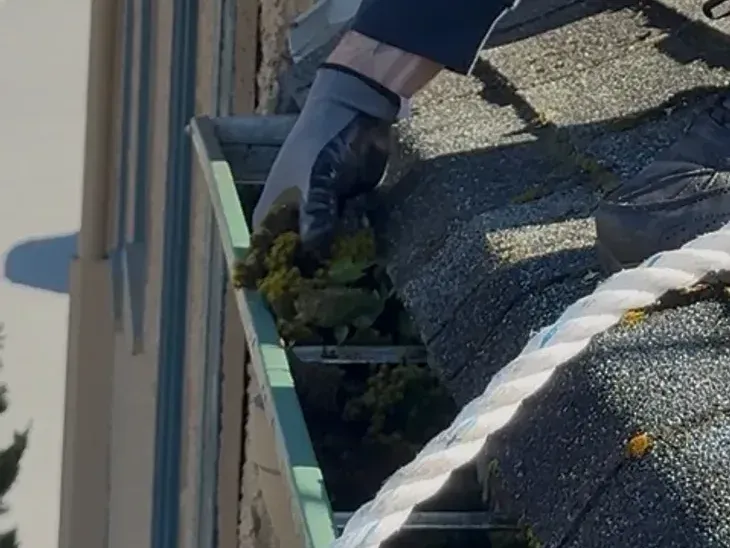
Gutters are joined at the seams with sealant—caulk, pitch, or marine-grade sealant, depending on the age and material. That sealant degrades. Temperature shifts, UV exposure, and the constant movement of water all work against it. Weeping usually starts small—a drip at the corner when it rains hard—and gets worse over time.
A seam that weeps will soak the fascia board behind it. That leads to rot and structural damage that you won’t see until it’s expensive. We reseal the joint using material rated for the outdoor environment and the movement that happens as the metal expands and contracts. If the metal itself is cracked or the joint is old and brittle, we may recommend replacing the section rather than resealing, because the real failure is underneath.
On older gutters, seams are often the first place to fail. The original sealant hardens over decades, then cracks—water finds the gap, and the slow damage begins. Catching a weeping seam early, before it soaks the wood behind it, is one of the best reasons to inspect your gutters annually in fall.
Hangers Pulling Out
Older gutters used spike-and-ferrule hangers—long spikes driven through a ferrule and deep into the fascia board. They’re straightforward and they work until the fascia softens. As wood absorbs water and weathers, it loses its holding power. The spike that went in solid 15 years ago gradually works loose.
Modern hangers—brackets that bolt through to the rafter—hold much better because they bypass the fascia. When we repair a gutter with failing spikes, we often replace them with modern fasteners. But here’s the hard truth: if the fascia board has softened, no fastener will hold forever. We’ll assess the wood and be honest about whether it’s repair or replacement.
Downspouts
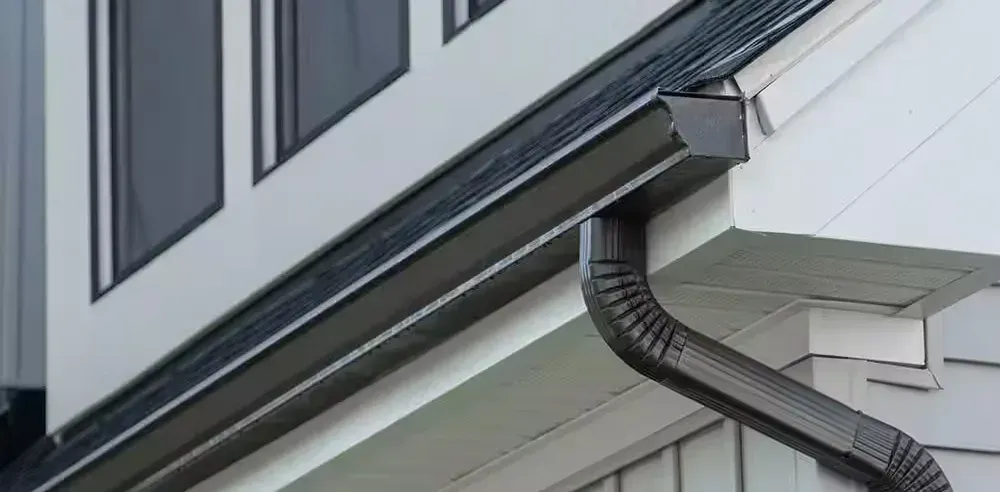
Downspouts get bent, crushed, and knocked loose—they’re exposed and they take abuse. A crushed downspout blocks the water and causes backup into the run, which then overflows over the edge and soaks the foundation. A loose downspout disconnects at the elbow, and water spills behind the gutter.
We straighten minor dents in aluminum or galvanized steel, but deep damage is usually faster and cheaper to replace than to repair. We also make sure the downspout extends to the ground or a designated discharge point. Water pooling at the base of your home is one of the most common causes of foundation trouble.
On many Victoria properties, especially older homes with no side access, downspout discharge is tricky to solve. We work with what you have—extending the run underground where space allows, or redesigning the elbow angle to direct water away from the foundation. The goal is simple: water that leaves the downspout should not come back to your house.
Fascia Rot: When Repair Becomes Replacement
Fascia rot is the one that changes everything. It means water has been getting behind the gutter, or the gutter has been leaking for long enough that the wood has given up. Rot spreads fast and quietly. Once it starts, it moves up into the soffit, across to adjacent sections, and down into the walls. When we find rot, repair is no longer the answer.
We’ll replace the rotted section and the gutter above it. We’ll also inspect nearby boards to make sure the rot hasn’t spread. The longer a leaky gutter goes unnoticed, the more wood gets involved. This is why early repair of seams and seeping hangers matters—it stops water from getting behind the fascia in the first place.
Gutter repair is straightforward when the problem is straightforward. We diagnose what went wrong, show you the options, and tell you what’s worth fixing versus what’s time to replace. That honesty is the whole point. We guarantee the work and we’re here to help make sure it lasts.
How it works
What Happens When You Book Us
Four steps and no surprises. You tell us about the house, we price the real roofline, and the ladder work is ours.
Send us the details
Your address, how many storeys, and anything we should know before we turn up.
The awkward parts are the useful ones — an oak hanging over the back run, a side gate too narrow for a ladder, a neighbour's drive we'd need to cross.
We price your actual house
Every quote is built from your roofline, not from an average.
Run length, height, pitch, how much has packed in and how we'll reach it all move the number. You'll have it in hand before anything is booked.
We do the climbing
Gutters cleared, downspouts flushed, water followed to where it lets out.
Whatever comes out of the run leaves with us. Nothing gets tipped into a garden bed or left bagged by the gate.
You hear what we saw
From the roof edge we see things that are invisible from the lawn.
A hanger starting to pull, a seam beginning to weep, water standing in a section that should drain. You'll hear about it either way, with nothing attached.
Four steps. That's the whole thing.
- You send us the address.
- We send you the price.
- We clear the gutters.
- You stop thinking about them.
Ready when you are — send the form or give us a call for a free quote.
Customer reviews
What customers say
“The service provided by the owners of the company and the staff were beyond exceptional. The price was also very exceptable and affordable.”
“Came out and quoted my gutters the same day I requested it! Came out and cleaned my gutters and did some repair while they were up there for a reasonable price! Going to use them for my windows in the spring. Great service”
Got questions?
Gutter Repair — questions
How can I tell if my gutters need repair?
Look for visible sagging, water staining on the fascia board, leaks at the seams, gutters pulling away from the house, or water spilling over the edge during rain. A sagging run is often the clearest sign. If you're unsure, a free inspection from us shows exactly what's going on.
Why do gutters sag in the middle?
Sagging usually happens because the hangers that support the run are spaced too far apart, the gutter itself has weakened, or water sits instead of flowing freely. On Victoria's rainy coast, a clogged section fills with water—that weight pulls the metal down. Fixing it means restoring proper slope, adding or repositioning hangers, or replacing the weakened section.
What causes seams to leak?
Seams are sealed with caulk or pitch, and that sealant breaks down over time. Temperature swings, UV exposure, and the constant movement of water all take their toll. A weeping seam can start small but will only get worse. We reseal the joint using marine-grade sealant, or replace the section if the metal itself is damaged.
Can you repair spike-and-ferrule hangers?
Spike-and-ferrule hangers are old and often pull free as the fascia board softens or rots. We can reinforce or replace them, but the real issue is usually the fascia behind them. We'll inspect the wood and recommend replacement if it's compromised, because hangers on weak fascia won't hold the weight of the gutter.
What should I do if my downspout is crushed?
A crushed downspout blocks the flow of water and can cause backups inside the gutter and behind the fascia. We can straighten minor dents, but if the damage is deep, replacement is usually the better fix. We also make sure the downspout reaches the ground or discharge point—water pooling at the base of your home causes more damage than a clogged gutter.
What is fascia rot and why does it matter?
Fascia is the board behind the gutter, and when water gets behind the gutter or the gutter leaks, it soaks into the wood. Rot develops quietly and spreads fast. Once the fascia is soft, the gutter can't stay up, and water finds its way into the walls and roof edge. Fascia rot changes the answer from "repair the gutter" to "replace the run and the board." We'll show you what's there.
Do I need to replace the whole gutter or just the damaged section?
It depends on the damage and the age of the gutter. A single seam leak or a sagging 8-foot section is worth fixing in place. Widespread rust, multiple failing seams, or rot over a long run usually means replacement makes more sense than chasing repairs. We assess the full picture and tell you which way costs less over time.
How long does gutter repair take?
A straightforward repair—resealing a seam, replacing hangers, or fixing a downspout—usually takes a few hours. Larger jobs like replacing a long section or addressing fascia rot take longer and might span two days. We give you a clear timeline before we start.
Do you stand behind the repairs you carry out?
We guarantee our workmanship. If a repair fails because of how we did it, we'll make it right. The guarantee covers labour and materials for one year after the job is done. The lifespan of the repair depends on the gutter's age, materials, and how much debris reaches it—that's why maintenance between repairs adds years to the system.
How can I prevent future gutter repairs?
Regular cleaning keeps gutters flowing and stops water from sitting and causing damage. We also recommend annual inspections in the fall, after the leaves drop. Cleaning out the run, checking the seams, and making sure the slope is right catches small problems before they become expensive repairs. It's far cheaper to maintain than to repair.
Gutter Repair in Victoria and the surrounding area
Tell us the address and we will get you a price.