
COMPLETE DRAINAGE
Gutter & Downspout Cleaning Victoria
A clear gutter that backs up at the bottom isn't clear at all. We flush downspouts, clear discharge points, and inspect perimeter tile so water actually leaves your property.
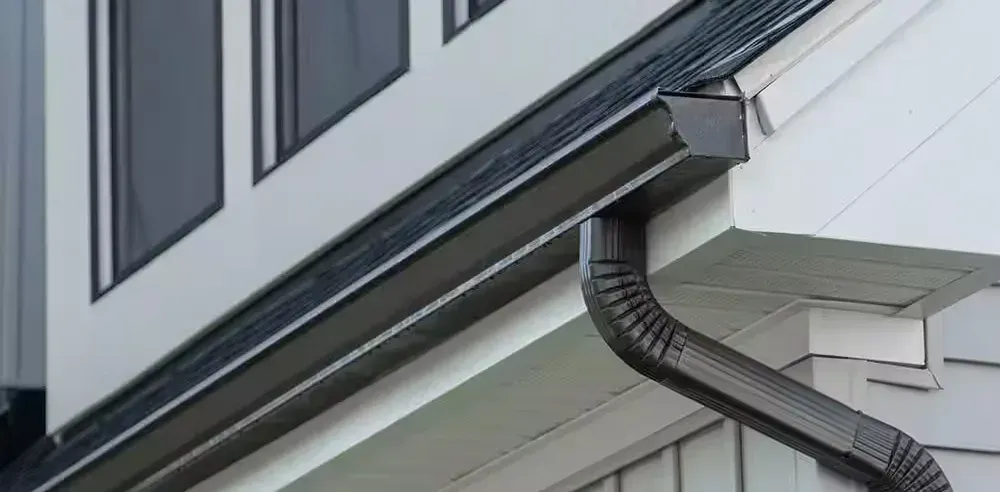
A clogged downspout isn’t just an inconvenience—it’s where most gutter problems actually live. While you’re cleaning fallen leaves from the trough, water may already be pooling at the discharge point, pressed up against your splash block, or backing into the perimeter tile beneath your foundation. That’s the thing about gutters: you fix the top and think you’re done. The problem was never at the top.
On Victoria’s older lots—the heritage cottages in James Bay and Fairfield, the postwar bungalows in Esquimalt, even the newer builds in Langford under second-growth fir—downspout discharge is where water either leaves your property or stays there. A blocked elbow behind the fascia, a splash block that’s sunk into the soil, or a yard-long stretch of underground clay tile choked with roots—any one of those stops the system. We don’t just clear the pipe. We trace where the water is supposed to go and make sure it actually gets there.
The elbow and the outlet
Garry oak acorns are the calling card. They’re the exact shape to wedge into a downspout elbow and stop dead. So are the matted needles from Douglas fir and western red cedar that mat together instead of washing through—they pile up and hold water, and within months they’re packed tight enough to block the pipe entirely. We clear the elbow itself, not just the run above it, because that’s where the first blockage always is.
The outlet—where the downspout meets the splash block or ties into the discharge system—is equally critical. If that’s clogged, a perfectly clear pipe above it might as well be plugged solid. Water backs up into the trough, overflows behind the fascia, and soaks into the walls.
Below the splash block
A splash block that’s sunk into the soil or tipped back toward the wall is common on older homes, and it’s not harmless. It’s a redirect that sends water toward your foundation instead of away from it. We replace them while we’re down there, and it takes minutes. Prevention costs far less than a damp basement.
On properties with buried perimeter tile—and there’s a lot of that on the south Island—the downspout might tie directly into the underground system. If that connection is blocked and you’re not draining properly, the tile backs up and the problem becomes invisible until the foundation starts to tell the story. We flush and inspect the connection point so you know whether the tile is doing its job or whether you need a drainage specialist to look deeper.
Some homes drain to the lane or sidewalk, especially on narrow corner lots. Same principle: the discharge needs to flow freely or the system backs up. We make sure the water actually leaves.
Why clearing the trough isn’t enough
You can spend a morning on the roof, clear every leaf, and still have water spilling behind the fascia. The trough was never the problem. The blockage is in the downspout elbow, the outlet, or the discharge path. That’s the most common reason homeowners call back weeks later: the gutters look clean and water is still pooling. We start by checking where it should go, then trace back up the system to find what’s stopping it.

How we clear it
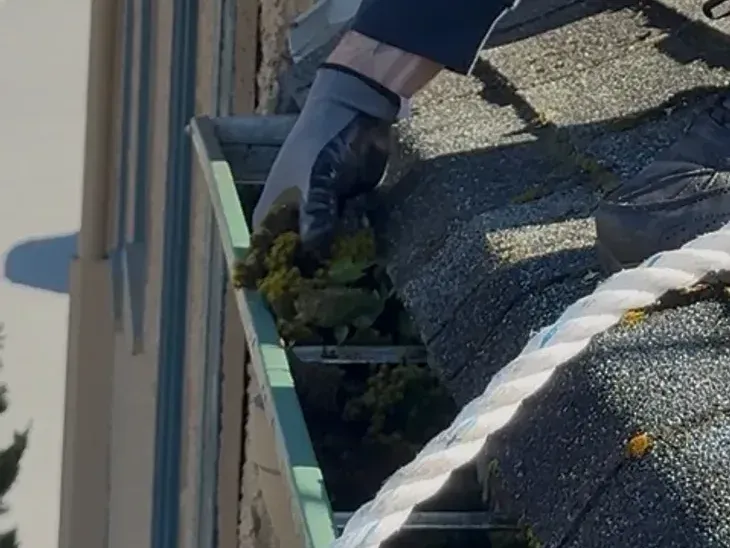
We flush from the top of the downspout with water pressure and hand tools, break up the blockage, then flush again from above to confirm the pipe is flowing. We inspect the full run—every elbow, every hanger, the outlet, and the splash block. On older homes, we look at where it ties into the perimeter tile so you know what’s underground. We take debris with us and leave you with a list of what we found and a clear system. If water isn’t flowing freely, we come back and make it right.
Why Victoria needs this now
The wet season runs October through March, and when it starts, every blocked discharge point becomes a problem. Douglas fir needles fall now. Garry oak acorns are coming soon—they’re late and they’re heavy. The roofs that drain to underground perimeter tile on James Bay’s heritage cottages are already showing their age, and a blocked downspout is often what tips foundation drainage from okay to concerning. Getting ahead of it in September and October is the whole point of a maintenance schedule.
We’ll tell you what you need and what can wait. Free quotes, and we’re insured, WCB-registered, and we guarantee the work.
How it works
What Happens When You Book Us
Four steps and no surprises. You tell us about the house, we price the real roofline, and the ladder work is ours.
Send us the details
Your address, how many storeys, and anything we should know before we turn up.
The awkward parts are the useful ones — an oak hanging over the back run, a side gate too narrow for a ladder, a neighbour's drive we'd need to cross.
We price your actual house
Every quote is built from your roofline, not from an average.
Run length, height, pitch, how much has packed in and how we'll reach it all move the number. You'll have it in hand before anything is booked.
We do the climbing
Gutters cleared, downspouts flushed, water followed to where it lets out.
Whatever comes out of the run leaves with us. Nothing gets tipped into a garden bed or left bagged by the gate.
You hear what we saw
From the roof edge we see things that are invisible from the lawn.
A hanger starting to pull, a seam beginning to weep, water standing in a section that should drain. You'll hear about it either way, with nothing attached.
Four steps. That's the whole thing.
- You send us the address.
- We send you the price.
- We clear the gutters.
- You stop thinking about them.
Ready when you are — send the form or give us a call for a free quote.
Customer reviews
What customers say
“Amazing! Sent in a request form on their website in the morning, heard back that afternoon, and booked for the next day. Very fast, reliable, and efficient.”
“They are efficient, hardworking, and reliable. I’ll definitely call them again for other services. Highly recommended!”
Got questions?
Gutter & Downspout Cleaning — questions
What's the difference between gutter and downspout cleaning?
Gutter cleaning removes debris from the trough itself—leaves, needles, moss. Downspout cleaning goes deeper: we clear the vertical pipe, the elbows, and the discharge point where water is supposed to leave your property. Both are essential. A full gutter with a clear downspout and blocked discharge is still a problem.
How do I know if my downspout is clogged?
Water spilling behind the fascia during rain is the clearest sign. So is water pooling around your foundation, soggy ground next to the downspout outlet, or—on older homes—a splash block that's sunk into the soil. If the gutters look clear but water isn't leaving, the clog is usually in the downspout itself or at the discharge point.
What happens if a downspout stays clogged?
Water backs up into the gutter, overflows behind the fascia, and soaks into the walls and foundation. On properties with buried perimeter tile—common on older Victoria homes—a blocked discharge point forces water into the ground system where it doesn't belong. That eventually leads to foundation dampness, cracked basement walls, and expensive repairs.
What's buried perimeter tile, and why does it matter?
Perimeter tile is the underground drainage system around your foundation, often clay or early plastic and decades old. On many older homes in Victoria, your downspout is tied into it. If that tile is root-invaded or broken—and if your downspout discharge is blocked—the system backs up. We inspect it as part of a thorough downspout clearing, so you know whether it's an issue.
Can you clear my perimeter tile?
We can inspect it and clear debris at the connection point where the downspout meets it. Full perimeter tile excavation and repair is specialized work that goes beyond gutter service. If we see a serious problem, we'll tell you plainly and recommend a drainage specialist. Most often, clearing the downspout outlet and flushing the system is all that's needed.
What if my downspout drains to the lane or sidewalk?
We'll clear it the same way—flushing from the top and breaking up any blockage below. Lane discharge is common on corner lots and narrow properties with no side access. We make sure it's flowing freely so water leaves your property instead of pooling under the downspout.
Do I need to replace my splash block?
If it's sunk into the soil or tipped back toward the wall, yes. A splash block that leans backward redirects water toward the foundation instead of away from it. We can replace it while we're clearing the downspout, and a new one costs far less than foundation repair.
How often should downspouts be cleaned?
Yearly, ideally in late fall after the heavy leaf drop and again in early spring before the wet season really begins. On properties with Douglas fir and cedar overhead, or with Garry oaks nearby—common across Victoria—twice yearly keeps the pipes clear and prevents the acorns and matted needles that stop up the elbows.
What does a downspout cleaning actually involve?
We flush from the top with a hose or auger, break up blockages by hand or with tools, inspect the full run from outlet to discharge, and flush again to confirm everything flows. We check splash blocks, look at the discharge point, and on older homes, we inspect where the downspout ties into the perimeter tile so you're not guessing about what's underground.
Do you offer a guarantee on your downspout cleaning?
Yes. We guarantee our work—if water isn't flowing freely after we leave, we'll come back and make it right. We also let you know exactly what we found up there: a list of what was blocking it and what the discharge system looks like. No surprises, no guessing about whether the job was thorough.
Gutter & Downspout Cleaning in Victoria and the surrounding area
Tell us the address and we will get you a price.